
Preparation
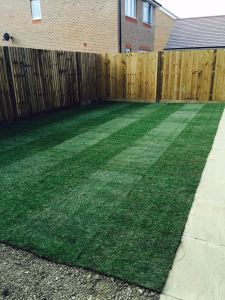
Ensure your ground is clear of any surface debris such as large loose stones, weeds, old lawn. Your new turf will need approximately 3 inches of good soil. This can be obtained by rotivating to the depth of 3 – 6 inches.
Once rotivated and any large lumps of soil are broken down, firm and level the soil by rolling or treading and raking, until the ground is level and smooth to which you are happy with.
A fine layer of topsoil is recommended to obtain a level laying surface more easily. Optionally you can rake a fertiliser in with the top layer of soil.
When measuring your lawn area, you can order your turf in square metres or yards, whichever is easiest for you. Turf should be laid within 12 hours of delivery from May to September and 24 hours between October to April.
Laying the turf
Should your laying surface be dry, gentle dampen the soil. Begin laying the turf against the edge of your garden, normally laying along the longest stretch of your garden.
Place the turf end to end pushed tightly together. The turf should be staggered (like brickwork).
Once you have laid your first line, place a row of boards on top of the turf and continuously work off them. This is to make sure no damage is done to your new lawn and also ensures an even more firm level surface.
Optionally when laying each row, lay them in the opposite direction. This will give your new lawn a 2 shaded pattern and make for a better final presentation.
Once your new lawn is in place firm the turf down by rolling it lightly.
Ensure the turf is watered adequately
Maintenance
Watering your new lawn is your main priority in making sure your new lawn fulfils its potential. Ideally optimum watering times are in the early morning and evenings.
Signs that your turf is not being watered enough are appearances of brown patches and gaps appearing between the rolls, meaning the turfs are shrinking, normally due to dry hot weather and lack of watering.
For the first few months you should always mow your lawn on a high setting.
 Warfield Turf